In this talk, the potential for membrane materials to reduce energy and carbon requirements for the separation of hydrocarbon feedstocks and products will be discussed. We developed a series of polymer materials that feature rigid polymer backbones with engineered mobility and functionality. We imbue the polymers with resistance to dilation induced by hydrocarbon immersion without the loss of solution-based membrane fabrication techniques. These materials exhibit good separation of liquid phase hydrocarbon mixtures at ambient temperatures via a hydraulic permeation technique known as organic solvent reverse osmosis. The integration of these polymeric membranes into fuel and chemical feedstock separation processes was investigated in a series of experiments. Technoeconomic analyses based on these experiments indicate that the best-performing membrane materials can substantially reduce the energy costs and associated carbon emissions of hydrocarbon separations (two to ten fold, depending on product specifications).
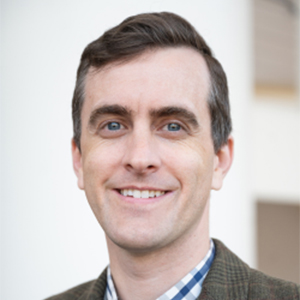
Ryan Lively,
Georgia Institute of Technology
Ryan Lively is the Thomas C. DeLoach Professor in the School of Chemical & Biomolecular Engineering at the Georgia Institute of Technology. His current research seeks to revolutionize fluid separation processes critical to the global energy and carbon infrastructure. He has a specific focus on membrane- and adsorbent-based science and technology aimed at addressing some of the world’s most difficult chemical separations.
His group’s research activities range from fundamental material science and discovery to translational engineering applications focusing on making and testing separation devices. He has received a variety of awards for his research efforts including the 2020 Allan P. Colburn Award from AIChE, and the 2022 Curtis W. McGraw Award from ASEE and a 2025 Finalist for the Blavatnik Young Scientist Award. He is currently an Editor for the Journal of Membrane Science, the Secretary of the North American Membrane Society, and an ACS Industrial & Engineering Chemistry Division Fellow. He is the Director of the Center for Understanding & Controlling Accelerated and Gradual Evolution of Materials for Energy (UNCAGE-ME), an Energy Frontier Research Center of the US Department of Energy. He has over 220 publications in the field of separations including articles in Science, Nature, and other impactful venues.